
Beacon Mounting Options for Work Trucks
By UNIT SIGNAL ·
Choose a magnetic beacon for a removable installation only where the exact mount and vehicle surface are suitable for the duty. Choose a permanent mount when a dedicated truck needs a repeatable position and protected wiring. Consider a DIN pole beacon when the vehicle already has a compatible socket, or when the upfit calls for that interface. Compare the complete base and connection kit with the truck before ordering a beacon by lens color or diameter.
Start with the truck’s operating routine
Ask the supervisor when the beacon is installed, switched on, removed and stored. A truck assigned to the same roadside task every day has different needs from a shared maintenance pickup that carries warning equipment only for certain jobs. Note where it is parked, where it needs to be cleaned and whether it passes through height-restricted bays. Record when the vehicle is stationary and when it moves with warning equipment fitted. The answers determine which mounting options should reach the shortlist.
Have the fleet or operator identify the required warning role and permissible operating conditions for the destination. Mounting compatibility does not determine whether a particular flash mode or color is permitted. Record that requirement separately so a buyer can compare hardware proposals without asking a supplier to make an operational decision for the fleet.
| Mount | Primary approval checks |
|---|---|
| Magnetic or vacuum-magnetic | Base type, approved surface, full contact, use restrictions and cable routing. |
| Permanent | Attachment points, base pattern, sealing, harness route and replacement access. |
| DIN pole | Exact socket and pole, lock, electrical contacts and installed height. |
Magnetic mounts need the right surface and duty
An ordinary magnet is intended for a suitable ferromagnetic surface. Verify the actual mounting point, since a vehicle may have a mix of steel, aluminum and composite panels. Flatness matters too. A steel panel with ribs, trim or a crowned profile may leave part of the mounting base unsupported. A paint protection layer or debris can affect contact. Check the roof and base conditions specified in the instructions and ask how the base should be inspected before use.
Use the operating restrictions for the exact mount. Some equipment is intended for stationary use or has restrictions on where it may be mounted or when the vehicle may move. A stationary holding check does not establish road-going suitability. Do not apply the instructions for a vacuum-assisted base to an ordinary magnetic one. Review the product’s own instructions and the vehicle or fleet requirements before it is used in service. The ECCO mounting guide lists separate installation and use requirements for its permanent and vacuum-magnetic mounts. Follow the instructions supplied with your chosen beacon.
Plan how the cable will reach the intended connection when fitted and where the unit will be stored when removed. Ask operators to identify points where the lead could be pinched by a door or interfere with equipment. Decide whether a portable unit needs a labeled kit containing its lead, base instructions and a protected place to store the lens. That makes the choice practical if several drivers will use it.
Permanent mounts suit a standard installation
Draw the mounting position, base footprint, hole pattern and cable entry for a dedicated installation. Have the upfitter check the structure underneath. The preferred warning position may have wiring, equipment or trim that prevents access to the fasteners. Before ordering, confirm how the base will sit against the panel, where the wiring joint will be protected and whether the fasteners remain reachable when the truck returns for service.
Decide whether the replacement unit should use the existing holes, a model-specific base or an approved adapter. Ask what is included in the quote and whether a damaged beacon can be replaced without removing the complete harness. In a fleet with several body styles, keep a record of the installation parts for each style. The purchase order should identify the base configuration as well as the light, so a replacement arrives with the hardware the workshop expects.
DIN pole mounts depend on the socket and the lock
Send clear photos of both the existing socket and any label or part number on it. Check the physical interface, how the unit is secured and the electrical connection. A description such as “pole mount” can refer to different arrangements. An extendable pole is not proof of a particular DIN interface, and a plug for a power outlet does not establish compatibility with a beacon mounting socket. Use the drawing of the actual base, pole and connection when comparing offers.
Measure the top of the beacon in its working position and in any position used to store or move the truck. Check the clearance at sheds, loading bays or overhead equipment. Confirm how the connection is protected when the light is removed and what part the workshop can replace if a socket or locking mechanism wears. Different pole arrangements can solve the same visibility problem but create different service tasks.
Compare real models by their offered base and supply
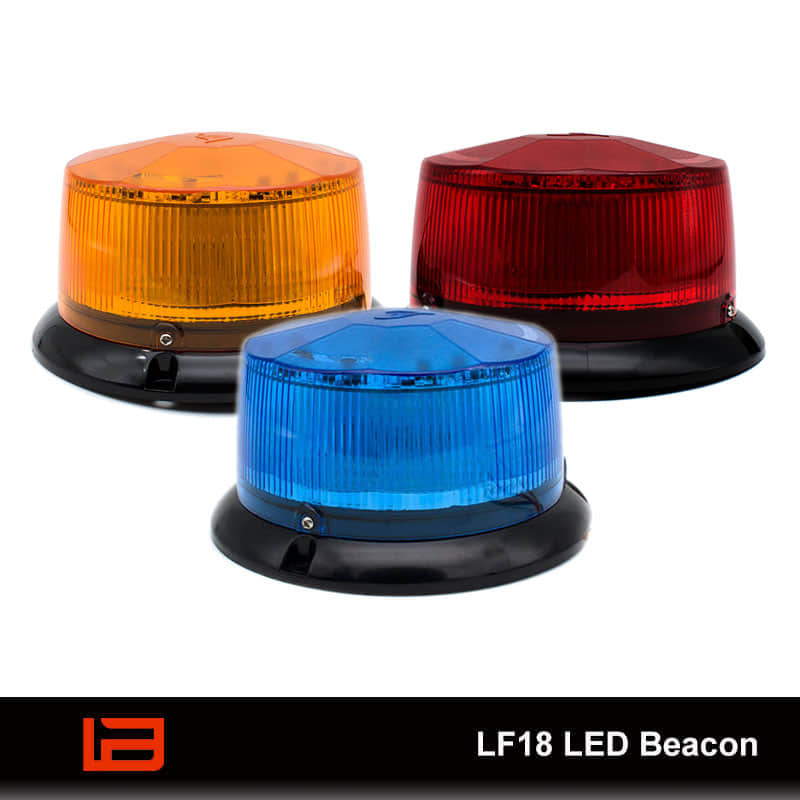
The AR24 LED warning beacon lists permanent and magnetic mounting options and a 12–24 V supply. The LF18 LED strobe beacon lists permanent, magnetic and extendable pole options and a 10–30 V supply. These figures identify the listed models. Ask for the exact base, connection method and wire or lead included with the configuration being quoted. Do not read the LF18’s extendable pole description as confirmation of a particular DIN socket.
Compare wiring and switching with the planned vehicle setup. A dedicated hardwired installation needs the installer to review the product wiring instructions, power source, protection and grounding. A portable connection needs an appropriate supply outlet and a cable route that works while the truck is in use. If the fleet has both 12 V and 24 V vehicles, list each group separately and evaluate the mounting and electrical requirements on both.
Define comparable replacement and new-installation quotes
For a replacement, list the installed beacon, the failed component if known, the existing base and the connection that the workshop plans to retain. Ask the supplier to state which parts can be reused and which parts the offer includes. Where the fleet has equipment from several model generations, collect labels and photos from representative trucks before treating all the bases as interchangeable.
For a new installation, give the mounting reference and describe the truck body and intended operating positions. Ask that the quote identify the base, lead, fasteners or mount hardware, connector and relevant drawings. If the main proposal assumes a different mounting location, have the supplier call that out. That makes it possible to compare the two configurations without discovery work after ordering.
Finish the comparison with a maintenance decision. A permanent installation can be simple to operate but require under-panel access for service. A removable kit can move between approved vehicles but leaves a loose unit and lead to manage. A pole-mounted spare can be quick to change when the interface is understood. Estimate how the fleet will handle inspection, removal and replacements using its own workshop conditions and approved equipment.
Record whether the quoted mount and vehicle are a verified pair or one that the buyer intends to assess on a sample. Include any use restrictions that operators need to know on the vehicle handover sheet, and use the first installation to confirm the drawing and parts list rather than relying on a description of the mount alone.
Check visibility and service access on the first truck
Observe the beacon from the approaches that matter to the job in a controlled area. Leave racks, toolboxes, lifts and other equipment in their normal positions. If an accessory screens the beacon, test another position or discuss an alternative mounting arrangement. Check how the operator switches it on and how the workshop reaches the base and connector. Record the final height, parts and photos so another truck can be fitted to the same standard.
Beacon mount questions buyers ask
Can a spare beacon fit an existing mounting base?
Compare the fastener or locking interface, the base drawing, and the electrical contacts. A similar-looking lens or housing does not establish interchangeability. Send the existing part number and a photo of the underside before purchasing a replacement.
Should a shared truck keep the portable beacon fitted all the time?
Decide based on the approved operating conditions for the product and the truck, plus clearance and storage requirements. If the unit is installed and removed frequently, write down where it can be used, how it should be checked and who is responsible for returning the kit to storage.
Send the mount and vehicle details with your inquiry
Browse the LED warning beacon range. Send UNIT SIGNAL photos of the mounting surface or pole socket, along with truck type, voltage, available space, intended use, color, quantities and destination. If you need a replacement, include the existing part number and base dimensions so the proposed configuration can be compared directly.